
• Español
    • Newsletter Miraflores
    • Noticias de Interés
  • English
    • Newsletter Miraflores
    • Latest News of Interest
  • Menu
  • Skip to right header navigation
  • Saltar al contenido principal

Newsletter Miraflores

Newsletter Miraflores

  • Español
    • Newsletter Miraflores
    • Noticias de Interés
  • English
    • Newsletter Miraflores
    • Latest News of Interest

Newsletters-ENG

Important information about short-term rentals in Spain

What does the recent Supreme Court judgment really mean?

Many owners may have read recent news about a Spanish Supreme Court judgment concerning short-term rentals.

As this subject can be confusing, we would like to explain the situation in a simple and practical way.

1. The judgment does not cancel tourist rental regulation

The Supreme Court judgment does not mean that tourist rentals are now free from regulation.

It does not cancel the rules that apply to tourist rental properties in Andalucía.

It also does not cancel community rules, community statutes, AGM decisions or the Spanish Horizontal Property Act.

2. What has been cancelled?

The judgment affects the new State Single Registry for short-term rentals.

This was a national system that required owners to obtain a specific State registration number before advertising short-term rentals on online platforms.

The Supreme Court has cancelled that State registry system.

3. What rules still apply?

The rest of the legal framework continues to apply.

This means that owners must still consider:

  • The tourist rental registration or licence required by the Junta de Andalucía.
  • Andalusian tourism regulations.
  • Any applicable municipal rules or planning restrictions.
  • The Spanish Horizontal Property Act.
  • The statutes of each community.
  • AGM decisions legally approved by each community.
  • Any valid community restrictions or additional fees previously approved.

4. Does this mean owners can automatically start short-term rentals?

No.

This judgment should not be understood as an automatic authorisation to start tourist rental activity.

Each property and each community must still comply with the rules that apply to its specific situation.

5. Why are there different rules?

Short-term rentals are affected by several different levels of regulation.

  • State rules: These are national rules. The recent judgment affects the new State Single Registry.
  • Regional rules: In Andalucía, tourist rentals are regulated by the Junta de Andalucía. These rules continue to apply.
  • Municipal rules: Town Halls may have their own planning or licensing rules.
  • Community rules: Each community may have its own statutes, AGM decisions, restrictions or additional fees, provided they have been legally approved.

6. What about AGM votes, restrictions or additional community fees?

These matters have not been automatically cancelled by the Supreme Court judgment.

Community authorisations, restrictions, statutory limitations or additional fees for tourist rental properties are separate legal issues.

They must be reviewed community by community, depending on:

  • The wording of the community statutes.
  • Previous AGM decisions.
  • The type of rental activity.
  • The date when the activity started.
  • The applicable regional and municipal rules.
  • The current legal position under the Horizontal Property Act.

7. Practical recommendation

Owners and communities should avoid quick conclusions based only on press headlines.

The safest approach is to review each case carefully before making decisions or assuming that previous obligations no longer apply.

Meridional will continue to monitor the situation and will provide further guidance where necessary.

For owners who would like more detailed guidance, Meridional has prepared two updated articles explaining the current situation in clear terms: one about tourist rentals in communities of owners and another about the requirements for a tourist rental property in Andalucía. These articles explain the main rules, community implications and practical steps to consider before making any decisions.


Important information about short-term rentals in SpainRead More

Christmas in Miraflores: a message for our entire community

Christmas in Miraflores: a message for our entire communityRead More

Pedestrian Bridge Refurbishment Successfully Completed in Miraflores

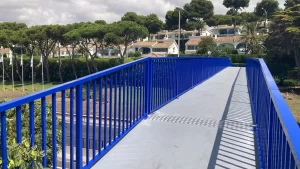
We are pleased to inform all property owners and residents of the Entidad de Conservación Hacienda Miraflores that the refurbishment works on the pedestrian bridge have been successfully completed.

After several months of specialised technical work, the bridge now has a fully secure and reinforced structure, adapted to current usage needs. The project has met all its objectives: structural reinforcements, complete replacement of the railings, comprehensive concrete treatment and the application of a new non-slip surface—all carried out under the supervision of the appointed engineer and with continuous monitoring by the administration team.

In addition to improving the safety and stability of the bridge, special care was taken to ensure the visual integration of the structure within the urban environment, preserving the character and functionality of this important pedestrian link in our community.

We would like to thank all owners for their patience and cooperation during the works. Thanks to this joint effort, we can proudly say that Miraflores now has a safer, stronger and fully operational pedestrian bridge, ready to continue serving as a secure crossing point for residents, visitors, and future generations.

Pedestrian Bridge Refurbishment Successfully Completed in MirafloresRead More

Further Progress in the Full Renovation of the Miraflores Pedestrian Bridge

The Miraflores Pedestrian Bridge Enters a New Phase of Renovation to Improve Safety and Accessibility

Residents of Hacienda Miraflores will soon notice visible progress in one of the community’s most frequently used structures: the pedestrian bridge. This well-known walkway, which connects key areas of the urbanisation and forms part of many neighbours’ daily routines, is entering a new phase of refurbishment focused on improving safety, accessibility, and comfort for all who use it.

A renovation designed with pedestrians in mind

The planned works include a full structural upgrade of the bridge, featuring a new, safer handrail, non-slip paving, and enhancements to ensure greater durability. Special protective coatings will be applied to guard against wear and tear, and drainage elements will be added to help manage rainwater—contributing to the bridge’s long-term upkeep and functionality.

These improvements go beyond technical updates. They are aimed at ensuring that residents and visitors—especially children, older adults, and people with reduced mobility—can cross the bridge with greater safety and peace of mind.

Temporary closure for safety reasons

To carry out these works, the pedestrian bridge will be closed from 26 May onwards. This temporary measure is necessary to guarantee both pedestrian safety and the smooth execution of the renovation. The bridge will reopen as soon as the construction company confirms it is safe to do so, and residents will be notified through the usual communication channels.

The Conservation Entity would like to thank all residents for their understanding during this brief disruption, and reminds everyone that the ultimate goal is a safer, more modern bridge—adapted to the current needs of the entire community.

Further Progress in the Full Renovation of the Miraflores Pedestrian BridgeRead More

Significant Progress in the Remodelling of Miraflores’ Pedestrian Bridge

Miraflores 02/05/2024

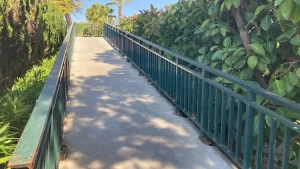
Progress continues on the pedestrian bridge works connecting Miraflores with the beach, which began on the 8th of April. The works are advancing at a good pace and, if this continues, the scheduled deadlines are expected to be met.

Renovation Process Underway

Currently, the removal of the deteriorated concrete layer is being carried out, a crucial task to ensure the safety and durability of the bridge. Additionally, a general sanitation is being undertaken in the most affected areas on both sides of the structure, ensuring that the bridge is not only safe but also aesthetically pleasing for all users.

Recommendations and Thanks to Residents

From the administration of Gran Comunidad Miraflores and the companies in charge of the works, Retineo and Cemosa, we wish to thank the residents for their civility and patience during this process.

It is important to highlight that, although the bridge is partially accessible, we strongly advise against its use until the works are completely finished, for everyone’s safety. If it is essential to cross the bridge during the works, please follow all the safety recommendations set out in the temporary signs and remember that it is at your own risk.

Commitment to Quality Work and Safety

With Cemosa’s supervision and Retineo’s experience in rehabilitation, we ensure that the bridge will not only meet the highest standards of quality and safety but will also represent a step forward in the continuous improvement of our community’s infrastructure.

This project not only symbolises a physical link between Miraflores and the beach but also the commitment of our community to the safety and well-being of all residents.

We deeply appreciate your cooperation and look forward to successfully completing this project, significantly enhancing the quality of life and safety in our environment.

Here you will find some photos that reflect the ongoing works.

Significant Progress in the Remodelling of Miraflores’ Pedestrian BridgeRead More

On the 8th, work begins on the remodelling of the pedestrian walkway linking Miraflores with the beach.

Miraflores, 04/04/2024

Miraflores Grand Community celebrates the start of work on the remodelling of the pedestrian bridge that connects our urbanisations with the beach and the Ronda Litoral promenade.

A renovated bridge for a safe community

The existing pedestrian bridge was in a state of disrepair which was of concern to residents. Its structure needed urgent improvements to avoid risks and lack of safety for users.

A joint effort

The refurbishment of the pedestrian bridge has been a priority for the administrator of Miraflores Grand Community and the management team. For this project, leading companies in this type of construction, such as Retineo and Cemosa, have been contracted and have put all their experience at the service of the community.

Leading companies at the forefront of the project

  • Retineo: Experts in Refurbishment and Restoration

Retineo, with its extensive experience in engineering and rehabilitation, will be responsible for carrying out the refurbishment of the bridge. It should be noted that this company has been awarded the government contract for the repair of 12 footbridges on the Costa del Sol.
Their commitment to excellence and track record of success gives us confidence that the new bridge will be a safe structure that will stand the test of time.

  • Cemosa: Quality Assurance

Supervision and quality control of the work will be provided by Cemosa, a leading company in the infrastructure sector. Their rigorous and meticulous approach will ensure that the new bridge meets the highest standards of safety and functionality.

A clear timeline for efficient execution

Start date: 8 April

Duration: approximately 3 months

The refurbishment works on the pedestrian bridge will start on 8 April next and are estimated to last 3 months.

During this time, the bridge will be closed to pedestrian traffic for a maximum of 2 weeks, in order to minimise inconvenience to residents. When this time comes, the dates of the pedestrian traffic interruption will be communicated.

Benefits for a growing community

The refurbishment of the pedestrian bridge will not only provide greater safety for residents who use it daily, but will also strengthen the connection between Miraflores and the beach, promoting mobility and integration with other points along the coast.

A symbol for the community.

This project represents a step forward in the development and improvement of the quality of life in Miraflores. It is a sign of the administration’s commitment to the well-being of residents and to creating a safe and pleasant environment for all.

Appreciation and commitment

Without the drive of Urszulla Karlsson as president and Ole Sigursson as vocal of infrastructure, together with the coordination of more than 3 years by our administrator Meridional, this project would not have been possible.
Choosing the best companies to participate in the project and obtaining advantageous financing to achieve this project, which has been in demand for years, has been a priority at all times.
Both the board of directors and Meridional would like to thank the residents in advance for their patience and understanding during the works.
We are confident that the refurbishment of the pedestrian bridge will be a success and a substantial improvement to our environment for years to come.

On the 8th, work begins on the remodelling of the pedestrian walkway linking Miraflores with the beach.Read More

New water regulation measures in Mijas due to the drought

As we all know, there is an emergency situation affecting our community and the whole Costa del Sol. The Junta de Andalucia has declared a situation of «serious and exceptional shortage» due to the drought in our region.

The Town Hall of Mijas, to which our community belongs, issued a proclamation on 13 November 2023, which is still in force, requesting the maximum cooperation of its citizens and obliging the adoption of measures to restrict the use of drinking water. These measures include a ban on watering gardens, golf courses, washing streets, filling private swimming pools, washing cars, among others.

As the situation has not improved, Acosol, which is the public company managing the integral water cycle for the municipalities of the Western Costa del Sol region and the Mijas Town Hall have taken new measures to manage water resources in the face of the drought, highlighting the reduction of water consumption and investments in infrastructure to ensure the supply.

For a better understanding, we will try to break down the main measures:

  • Supply regulation: Gradual reduction of water pressure in the whole of the Western Costa del Sol, including Mijas, from 21st February.
  • Limitation: From 200 litres per inhabitant/day to 160 litres. This is an order of the Andalusian Drought Committee.
  • Restrictions on use: The Prohibitions included in the Drought Decree are maintained, such as irrigation with drinking water of gardens, golf courses, filling of swimming pools, and cleaning of vehicles, etc.
  • Timetable limitations: Reduction of pressure at night, with possible lack of supply mainly in high areas and buildings without a cistern, between 00:00h and 6:00h, except Saturdays.
  • Investments for supply: A new Decree-Law announces the extension of the desalination plant in Marbella and the creation of new desalination plants in Estepona and Fuengirola.
  • Sanctions: Measures against excessive and unscrupulous consumption, with special attention to exaggerated consumption. The Mijas Town Hall is drafting a new regulation with more sanctions.
  • Citizen collaboration: Call for reduction of consumption and awareness of water scarcity.
  • Ordinance and sanctions: In these ordinances, sanctions are established for non-compliance with the measures.
  • Regional coordination: These new measures are agreed in the Costa del Sol drought tables formed by all the municipalities, as is the case of Mijas, as well as the Mancomunidad and Acosol, together with all the operators that provide service in the region.

New water regulation measures in Mijas due to the droughtRead More

Congratulations from our president

Dear owner,

On these very special dates, I want to express my deepest gratitude for your valuable contribution to the coexistence in our community. Thanks to your collaboration, support and commitment, Gran Comunidad Miraflores continues to improve and has consolidated as a place where we all feel at home.

We have strived one more year to create a welcoming, safe and harmonious environment, where respect and coexistence prevail. As president, I assure you that I will continue to work with enthusiasm and responsibility to improve our community for another year.

I invite you to celebrate Christmas with joy and hope, and to let yourself be inspired by the values of peace, understanding and fellowship. Remember that you are a key piece of our community, and that together we form a great family.

I wish you to enjoy these days with your loved ones, and that light and love fill your heart.

With love and good wishes,

Urszula Karlsson

Congratulations from our presidentRead More

8 curious traditions in Spain at Christmas

It is a good time to write about more than just the rules in the neighbourhood communities, problems with leaks in the common areas or what taxes you have to pay. Let’s take a break, because we want to tell you about some of the traditions and customs we have in Spain at Christmas time.

During such a special time as Christmas, each country celebrates and lives these dates with its own customs and traditional gastronomy which, on occasions, have much in common and, on others, can be completely different.

We Spaniards have our own particularities when it comes to enjoying these festive weeks, which in our case, take us until 6 January. In case you hadn’t noticed, today we take a look at some of Spain’s most curious Christmas traditions. Have you already incorporated any of them?

Setting up the nativity scene

If there is one thing that characterises the Christmas decorations in Spanish homes, it is the nativity scene. And while in other places the lights and the details of Father Christmas and his elves, not forgetting the sprig of mistletoe, have been the protagonists, the tradition in this land has revolved for the most part around the nativity scene.

The nativity scene, which represents the birth of the baby Jesus in the village of Bethlehem, can be of any size, from the simplest with its three central figures (the baby Jesus, the Virgin Mary and Saint Joseph) to the most elaborate, which constitute authentic models and miniature villages.

In fact, the nativity scene tradition in Spain has contributed to the fact that many historic nativity scenes are exhibited at this time of year and that going with children to see the nativity scenes in different cultural and public spaces in our city is also a classic at Christmas time.

The Song of the Sibyl

The traditional Misa del Gallo (Midnight Mass) is celebrated in Spain after Christmas Eve dinner, to celebrate the birth of Jesus. However, in Mallorca (Balearic Islands) they have an even more unique tradition related to this religious act. We are referring to the chant of the Sybil, which has been listed as Intangible Heritage of Humanity by UNESCO since 2010.

It is a chant of medieval origin, with a Gregorian melody and no instrumental accompaniment, performed by a person dressed in a tunic, with a cape and a sword. The chant of the Sibyl takes place in different temples in Mallorca, although the most emblematic are those held in Palma Cathedral and in the Lluc sanctuary.

The Apalpador

In the Galician mountains, especially in the area of O Courel and O Cebreiro, there is a figure that competes every year with Father Christmas. This is the Apalpador, a Christmas character who every year, on 24 and 31 December, comes to the houses to feel the children’s tummies to check that they have eaten well during the rest of the year and leaves them presents and a handful of chestnuts. This is one of Galicia’s popular traditions that has been revitalised in recent years.

The Holy Innocents

Every December 28th in Spain a very curious date is celebrated: the Holy Innocents. On this day, tradition dictates that pranks are played on family and friends. Its symbol is a paper doll that represents the innocent person who has fallen for the joke that has been played on him or her.

The origin of this tradition is associated with the festival of the fools that took place in the Middle Ages between Christmas Day and New Year’s Day. It was a day of carnival atmosphere in which ecclesiastical institutions were parodied, people dressed up in costumes and sang obscene tunes.

The Olentzero

The Olentzero also leaves gifts for the children of the Basque Country and Navarre. He is a character who leaves the woods where he lives to give presents to children every 24th December. He is a good-natured charcoal-burner, a bit of a rogue and a great lover of food and drink. Another tradition that brings happiness and joy to the youngest members of the family.

The twelve grapes

Undoubtedly, one of the traditions of Spanish Christmas that makes it unique is the twelve grapes, also known as the lucky grapes. Every 31 December it is customary to take one grape for each stroke of the clock at 00:00 hours to welcome the first day of the year and to do so by invoking good luck.

The origins of this tradition date back to the 19th century, when it was already practised by some bourgeois, drinking grapes and champagne at private parties, but it became popular in 1909, when there was a surplus harvest of white grapes in Alicante and a campaign was launched to link it to New Year’s Eve and expand the custom. And they succeeded.

Roscón de Reyes (Three Kings’ cake)

Every 6 January, the «roscón de Reyes» is a must on the tables of Spanish households, one of those traditions that are so much a part of us and which causes endless queues in patisseries and bakeries all over the country. After Twelfth Night, it is typically eaten for breakfast, as a dessert after lunch or as an afternoon snack.

This large sweet doughnut-shaped pastry hides a bean and a small figure inside. Whoever finds the bean in its piece must pay for the roscón, and whoever finds the figurine, in addition to keeping it as a souvenir, must be crowned king. That is why the roscón is sold with a golden cardboard crown.

The 22 December and 6 January lotteries

22 December is a day full of excitement, because this is the date of the Christmas lottery draw. Almost everyone wants to participate and, in the months leading up to Christmas, people buy lottery tickets that can be shared with friends or family (to spread the luck).

The first Christmas lottery draw was held in 1812. Since 1957, it has been broadcast live on television, and it is common for people to follow it live. The most emblematic? The children of San Ildefonso, who are in charge of singing the winning numbers.

As a curiosity, 22 December is also, unofficially, the Day of Health: in this way, people who do not win the lottery are appealing that, at least, they are in good health.

The Lotería del Niño is, after Christmas, the most important lottery draw in Spain.

Before becoming what we know today, the Sorteo del Niño was a series of draws held as early as the 19th century for charity, to fund a children’s hospital. The idea came from María del Carmen Hernández y Espinosa de los Monteros and in 1868 these games were known as El Niño.

8 curious traditions in Spain at ChristmasRead More

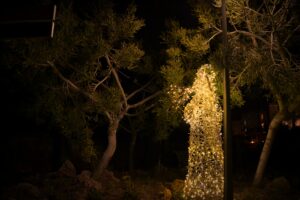
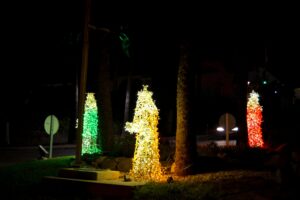
Christmas lights are already shining in Miraflores

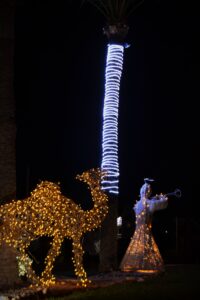
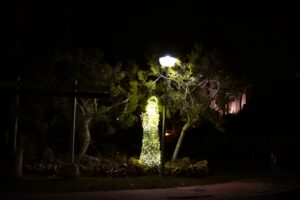
Miraflores is dressed this year with more light and colour to celebrate Christmas thanks to the efforts of the representatives of Gran Comunidad Miraflores and our administrator Meridional.

Undoubtedly, the good relations between Mijas Town Hall, Gran Comunidad and Meridional, are the ones that have allowed us to install this year some beautiful lights in our roundabouts and gardens.

Gran Comunidad and Meridional have expressed their satisfaction to the Town Hall with the result of the Christmas lighting and hope that it will continue to get better and better every Christmas. In the accompanying photos, you can see how beautiful they look.

We would like to take this opportunity to wish you all the best for this beautiful time of the year.

Christmas lights are already shining in MirafloresRead More

  • Página 1
  • Página 2
  • Ir a la página siguiente »

Site Footer

MIRAFLORES Ctra. Cádiz N340 km 199 29649 Mijas Costa Málaga Spain

Copyright © 2026 · Miraflores Gran Comunidad